SOLVED: Which statement about double-entry accounting is false? a Itlooks at both the debit and credit sides of an account b Itrequires transactions to be recorded in at least two places. c Itdoes not require the total value of credit accounts and the debitaccounts to be equal. d It ensures the journal is alwaysbalanced.
SOLVED: Which statement about double-entry accounting is false? a Itlooks at both the debit and credit sides of an account b Itrequires transactions to be recorded in at least two places. c Itdoes not require the total value of credit accounts and the debitaccounts to be equal. d It ensures the journal is alwaysbalanced.
Content
- What Is Double-Entry Bookkeeping? A Simple Guide for Small Businesses
- Multiple Choice Questions and Answers
- Double-Entry Accounting Explained
- What will happen if an entry is posted on the wrong side of the relevant ledger account?
- Get Your Questions Answered and Book a Free Call if Necessary
- Would you prefer to work with a financial professional remotely or in-person?
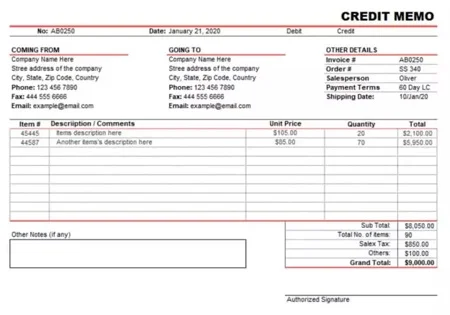
In the double-entry accounting system, transactions are recorded in terms of debits and credits. Since a debit in one account offsets a credit in another, the sum of all debits must equal the sum double entry accounting meaning of all credits. For the accounts to remain in balance, a change in one account must be matched with a change in another account. These changes are made by debits and credits to the accounts.
- If the accounting entries are recorded without error, the aggregate balance of all accounts having Debit balances will be equal to the aggregate balance of all accounts having Credit balances.
- It follows that the purchases account would be correctly debited, whereas the Sydney Traders account would have a Dr. entry instead of a Cr.
- Business transactions are events that have a monetary impact on the financial statements of an organization.
- A transaction in double-entry bookkeeping always affects at least two accounts, always includes at least one debit and one credit, and always has total debits and total credits that are equal.
- The accounting entries are recorded in the “Books of Accounts”.
- The total amount of debits must equal the total amount of credits in a transaction.
Dependable accounting software will be written/coded to enforce the rule of debits equal to credits. In other words, a transaction will be accepted and processed only if the amount of the debits is equal to the amount of the credits. Essentially, the representation equates all uses of capital (assets) to all sources of capital (where debt capital leads to liabilities and equity capital leads to shareholders’ equity).
What Is Double-Entry Bookkeeping? A Simple Guide for Small Businesses
Debit amounts will be entered on the left side of the T-account, and credit amounts will be entered on the right side. The title of the account will appear at the top of each “T”. A second popular mnemonic is DEA-LER, where DEA represents Dividend, Expenses, Assets for Debit increases, and Liabilities, Equity, Revenue for Credit increases. However, as can be seen from the examples of daybooks shown below, it is still necessary to check, within each daybook, that the postings from the daybook balance. A bakery purchases a fleet of refrigerated delivery trucks on credit; the total credit purchase was $250,000. The new set of trucks will be used in business operations and will not be sold for at least 10 years—their estimated useful life.
B) Standard costing is a control technique that reports variances by comparing actual costs to pre-set standards so facilitating action through management by exception. It enables the management to discharge all its functions i.e.
planning, organization, staffing, direction and control efficiently with the
help of accounting information. The term management accounting refers to accounting
for the management. Management accounting provides necessary information to
assist the management in the creation of policy and in the day-to-day
operations.
Multiple Choice Questions and Answers
A financial professional will offer guidance based on the information provided and offer a no-obligation call to better understand your situation. With NetSuite, you go live in a predictable timeframe — smart, stepped implementations begin with sales and span the entire customer lifecycle, so there’s continuity from sales to services to support. D) Marginal costing is not a technique of cost analysis. Usually, adjustments can be made when you record the wrong amount. Reversals are often used when you record an entry in the wrong account.
- In double-entry bookkeeping, debits and credits are terms used to describe the 2 sides of every transaction.
- C) In marginal costing fixed costs are treated as product cost.
- These changes are made by debits and credits to the accounts.
- A second popular mnemonic is DEA-LER, where DEA represents Dividend, Expenses, Assets for Debit increases, and Liabilities, Equity, Revenue for Credit increases.
- For example, if a business sells a good, the expenses of the good are recorded when it is purchased the good, and the revenue is recorded when the good is sold.
Double-entry bookkeeping is usually done using accounting software. The software lets a business create custom accounts, like a “technology expense” account to record purchases of computers, printers, cell phones, etc. You can also connect your business bank account to make recording transactions easier. In double-entry bookkeeping, debits and credits are terms used to describe the 2 sides of every transaction. Debits are increases to an account, and credits are decreases to an account.
Double-Entry Accounting Explained
With correcting entries, you adjust the beginning of an accounting period’s retained earnings. Retained earnings include your take-home money after paying expenses for the period. These kinds of entries are called prior period adjustments. When you pay for the domain, your advertising expense increases by $20, and your cash decreases by $20. Small businesses with more than one employee or looking to apply for a loan should use double-entry accounting. This system is a more accurate and complete way to keep track of the company’s financial health and how fast it’s growing.

The key principle established by the Standard is that a provision should be recognised only when there is a liability i.e. a present obligation resulting from past events. A credit is an accounting entry that either increases a liability or equity account, or decreases an asset or expense account. A debit is an accounting entry that either increases an asset or expense account, or decreases a liability or equity account. Even with automation and easy-to-use accounting tools, bookkeeping mistakes can happen.